
We may experience pressure or stress in a variety of circumstances. But did you know that journaling writing down your thoughts can help lower stress levels and provide insight into challenging situations?
Writing down your thoughts, feelings, and experiences on a daily basis and thinking back on them what is journaling all about? Even now, keeping a journal is highly private.
However, journaling techniques are more like speaking to the person you are now. Or perhaps even the person you wish to become, rather than the teenage angst version of yourself.
Keeping a diary may have a significant positive impact on your mental, emotional, and even physical health.
In the next guide, I will teach you Effective journaling strategies step by step.
What are Journaling Techniques?
Journaling techniques are the methods in which you may go about journaling. Learning how to journal effectively commonly involves the use of paper, pencil and mind.
Journaling can mean different things to different people.
So, by doing journaling about your ideas and senses is renowned for helping your safety. Plus, it can reduce stress, depression, and tiredness.
In addition, many scientific studies show that regularly writing down your thoughts improves your ability to stay present. Your memory and sleep will improve, and you will build your resilience and so better your self-confidence.
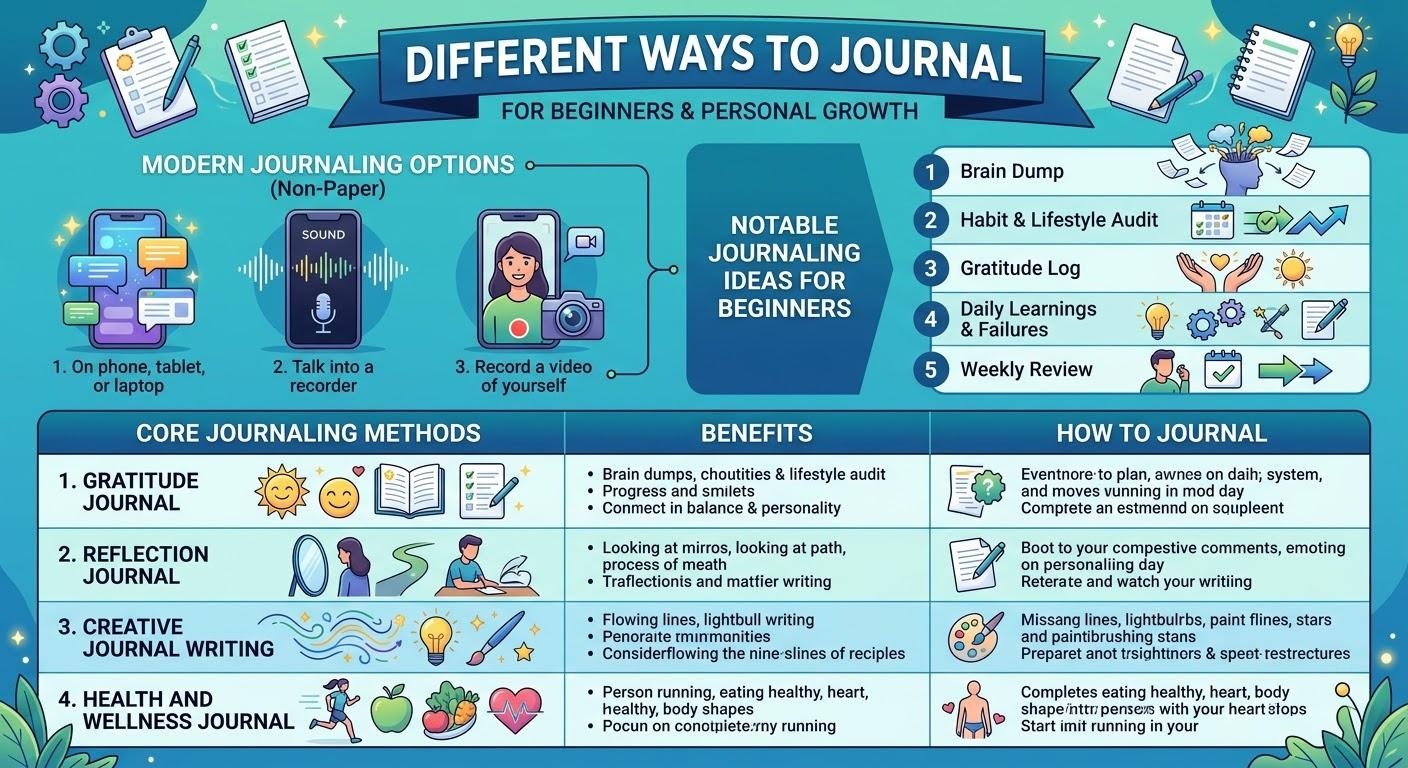
Different Ways to Journal
If you prefer not to write things down on paper, you can also:
-
On your phone, tablet, or laptop, type yourself a message using an email, text, or notes app
-
Talk into a recorder, like your phone's audio recording feature
-
Use your phone to record a video of yourself.
Here are the notable journaling ideas for beginners.
-
Brain Dump: Thinking about how to write a journal, you need to jot down all of your rushing thoughts, feelings, and ideas without any filters.
-
Habit & Lifestyle Audit: Monitor your daily activities and compare your current behaviours with those of your best and worst selves.
-
Gratitude Log: Keep a gratitude journal by listing specific things you are thankful for, especially on difficult days.
-
Daily Learnings & Failures: Note what went wrong, what depleted your energy, and the lessons you learned.
-
Weekly Review: In the end, recap the previous week, identify accomplishments or diversions, and schedule important activities for the following week.
Types of Journaling Methods
You may practise journal writing in a variety of ways that might make it more engaging.
Check out the following chart to see how different styles of journaling techniques may help you become more productive.
1. Gratitude Journal
-
Benefits: This type creates feelings of appreciation for things you own and focuses on positivity.
-
How to journal- How to start journaling? For that, you need to write a minimum of three things you are thankful for in your life.
2. Reflection Journal
-
Benefits- Now track your progress and developments. In addition, Reflective journaling for research helps you get your feelings and ideas out when you have no one to say to. And then classify your life’s patterns for better decision-making.
-
How to journal- To start journaling, you need to recollect on your progress, and you need to be honest with yourself. Then work out what did and did not solve things, and correct accordingly.
3. Creative Journal Writing
-
Benefits- Creative journal writing acts like a source to investigate and find ideas, grow new habits and practice them. Moreover, you have to motivate yourself to carry on even if you do not feel like it or are sick.
-
How to Journal- To master journaling techniques, you have to write in flow and do not worry about grammatical mistakes.
4. Health and wellness journal
-
Benefits- Journaling methods for mental clarity and wellness monitor your emotional, physical, and mental well-being. Plus, aid in your quest to become the finest version of yourself.
-
How to journal- To write a health and wellness journal, you need to follow your patterns of sleep, mental health schedules and ideal eating practices. You need to write about any physical activity you employ in.
Examples of journaling
Journaling techniques include gratitude lists, bullet diaries, and written communication.
Moreover, academic journaling, through systematic reflection, can help students and researchers reduce stress, improve memory, and enhance exam performance.
-
Gratitude Journal- Firstly, you need to write down three positive aspects of your day in your gratitude journal.
-
Bullet Journal- You have to monitor routines, tasks, and daily activities.
-
Written communication- Writing openly about intense concerns or unpleasant situations is known as expressive writing.
-
Dream Journal- Once you wake up, dreams are recorded and analysed immediately.
-
Learning Journal- Lastly, review new thoughts and concepts.
Do you want to become an expert writer and use Professional journaling practices?
Just connect with our team of maven and experience Creative journaling for academic writers. Our writers will teach you step by step and help you develop your skills.
Engage Now
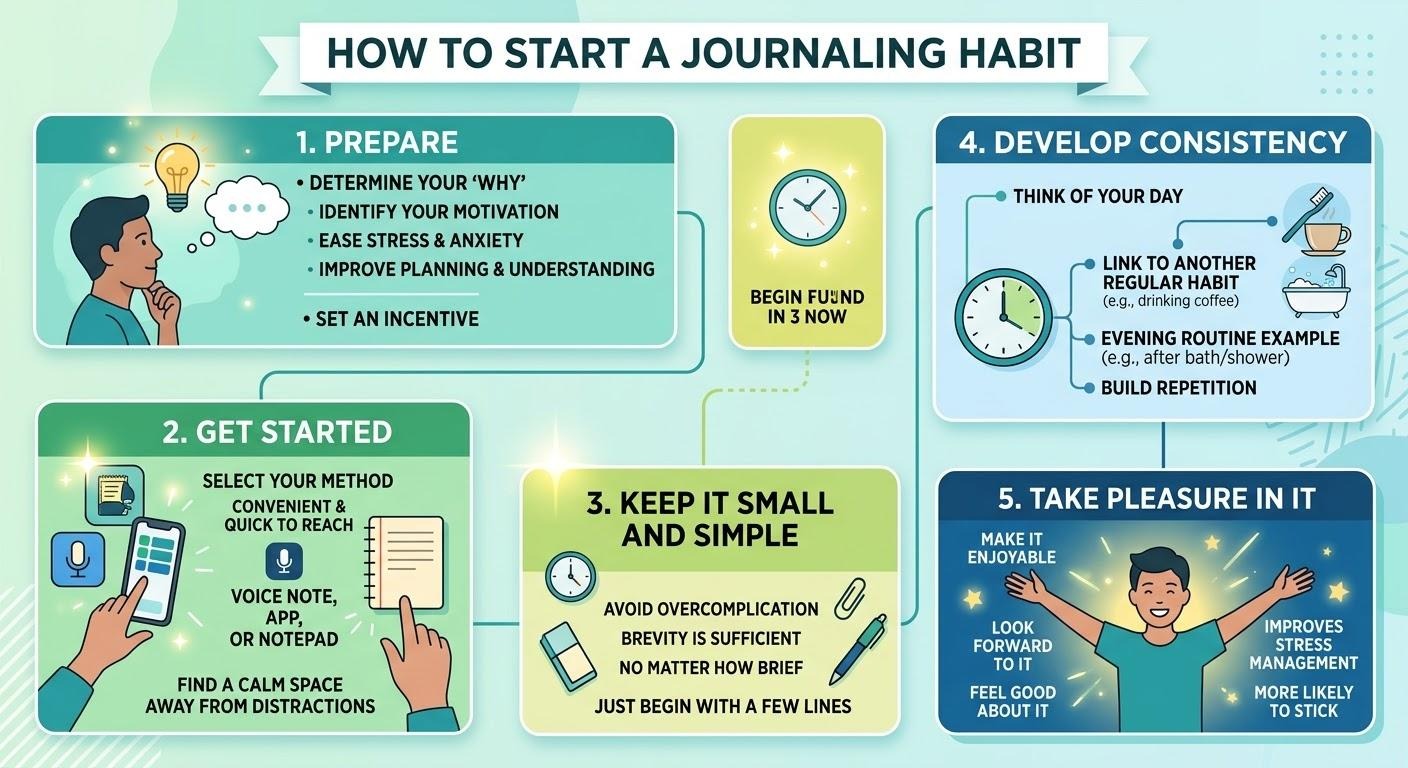
How to start a journaling habit?
Here are the effective tips for how to start a journaling habit.
1.Prepare
In the first step, determine your 'why' for starting to journal and your incentive to keep it up. Do you feel worried or anxious? Are you having difficulty managing stress?
Do you want to improve your abilities in planning, contemplation, and understanding?
It will be much simpler to begin if you become clear on your motivation for starting to journal and prepare well before starting journaling techniques.
2. Get started
Select a way that is convenient for you and quick to reach, such as a voice note, an app, or a notepad.
Also, find a place where you feel calm and comfortable, away from distractions. And so use Mindful journaling techniques.
3. Keep it small and simple
Anything you write in your diary, no matter how brief, is sufficient; avoid overcomplication.
But remember to keep things simple.
4. Develop a habit of consistency
Think about a time in your day when you can keep a notebook and link it to another regular activity, such as taking a bath or shower in the evening.
5. Take pleasure in it
Lastly, make it something you look forward to and feel good about.
As a result, you will be more likely to stick with it and improve your capacity for stress management.
By using this Structured journal writing guide, you will surely write a good journal and develop skills.
Frequently Asked Questions
Q1: What is the primary objective of journaling for personal development?
It reduces daily stress, increases self-awareness, and helps you process complicated emotions clearly.
Q2: How frequently should I write in my journal to notice results?
You can achieve mental clarity in as little as 5 to 10 minutes per day, or a few times per week.
Q3: What are the easiest journaling approaches for beginners?
For novices, unfiltered brain dumps and fast 3-item appreciation logs work best.
Q4: Is digital journaling just as beneficial as writing on paper?
Yes, typing or recording voice notes offers similar mental benefits with added convenience.
Q5: What's the distinction between a reflection and a thankfulness journal?
Gratitude emphasises recognising positive experiences, whereas reflection examines daily actions and improvement.
Q6: When I'm having writer's block, what should I write about?
Use straightforward cues, such as assessing your current energy levels or summarising one lesson you learned today.
Q7: How can I effectively establish a daily journaling routine?
Align your writing time with a regular daily routine, like having coffee in the morning.
Q8: What are the advantages of journaling for professional and academic writers?
It improves analytical thinking, helps organise difficult research concepts, and reduces writing anxiety.